Flap Discs for Concrete: A Comprehensive Guide
When tackling concrete projects, choosing the right abrasive tool is critical for efficiency and a professional finish. Flap discs for concrete are a versatile solution for grinding, blending, and deburring. This guide provides an in-depth look at their benefits, applications, types, and how to select the optimal disc for your specific needs. Whether you’re a construction professional or a DIY enthusiast, understanding these discs will help you achieve superior results.
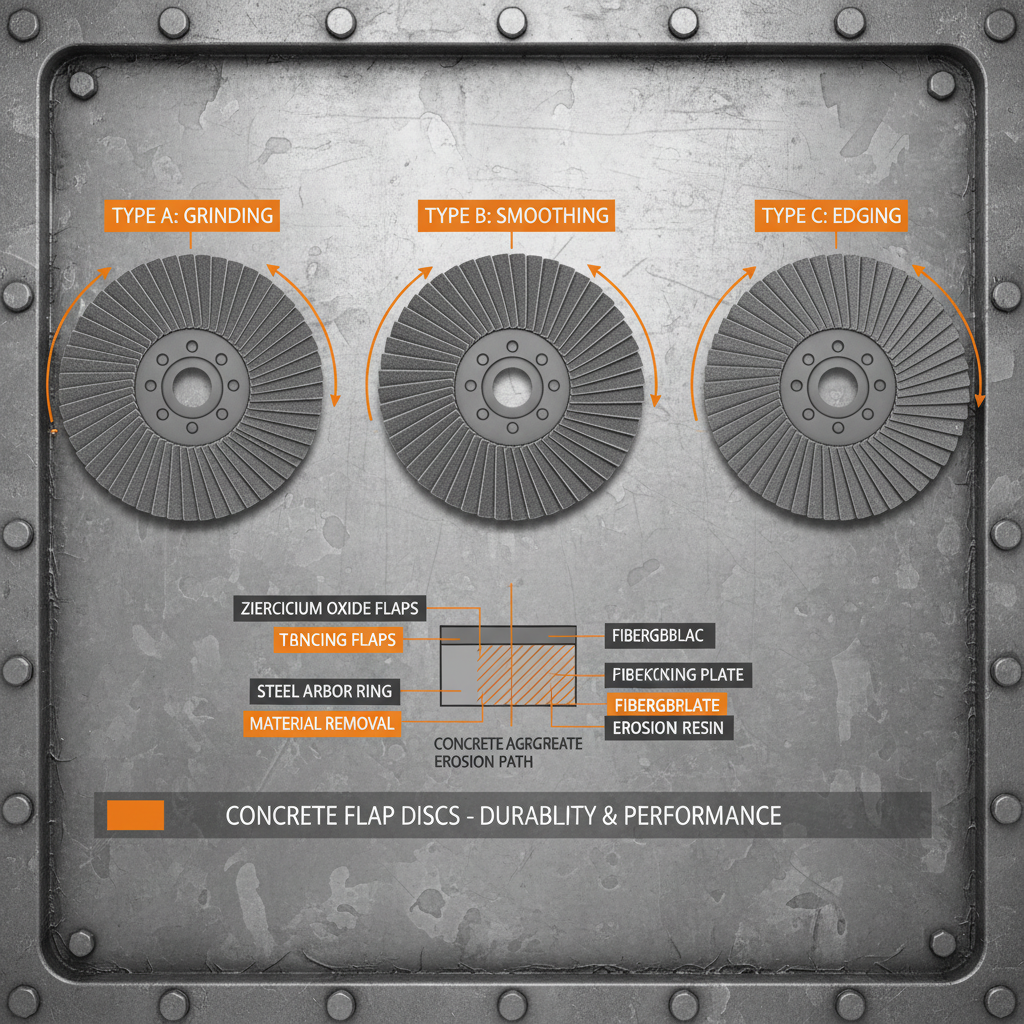
Understanding Flap Disc Technology
Flap discs consist of abrasive flaps bonded to a backing plate. These flaps are typically made of aluminum oxide or silicon carbide, each offering different characteristics. Aluminum oxide is ideal for general-purpose grinding and blending on concrete, while silicon carbide excels in more aggressive applications and on harder materials. The overlapping flaps provide a cool, fast cut, minimizing heat buildup and reducing the risk of damaging the concrete surface. Their flexibility allows them to conform to irregular shapes, making them perfect for contouring and edge work. A well-chosen concrete flap disc will significantly improve your project's efficiency.
Key Benefits: Cool, fast cut, minimizes heat, conforms to irregular shapes, versatile for grinding, blending, and deburring.
Choosing the Right Grit for Your Project
The grit of a flap disc determines its aggressiveness. Lower grit numbers (e.g., 36, 60) are coarser and remove material quickly, making them suitable for initial grinding and removing imperfections. Higher grit numbers (e.g., 80, 120) are finer and create a smoother finish, ideal for blending and surface preparation. Selecting the appropriate grit is crucial for achieving the desired outcome. Starting with a coarser grit and progressively moving to finer grits is often the best approach for a flawless finish. Using the wrong grit can lead to excessive material removal or a rough surface. Investing in a variety of grits ensures you’re prepared for any challenge.
Grit Guide:
• 36-60 Grit: Heavy material removal, initial grinding
• 80-120 Grit: Blending, surface preparation, smoothing
Flap Discs for Concrete vs. Diamond Grinding Wheels
While both flap discs and diamond grinding wheels are used on concrete, they serve different purposes. Diamond wheels excel at aggressive material removal and creating very flat surfaces, but they can be more expensive and require water cooling in some applications. Flap discs for concrete are more versatile for blending, deburring, and finishing work. They are also generally less expensive and easier to use. The choice depends on the project’s scope and desired outcome. For light to medium grinding and finishing, flap discs are often the preferred option.
Safety Considerations When Using Flap Discs
Always prioritize safety when working with power tools. Wear appropriate personal protective equipment (PPE), including safety glasses, a dust mask, and gloves. Ensure the workpiece is securely clamped or supported. Inspect the flap disc for damage before use and discard any discs that are cracked or worn. Use the correct speed rating for the disc and the angle grinder. Never use a flap disc that exceeds the maximum RPM of your grinder. Follow all manufacturer’s instructions and safety guidelines.
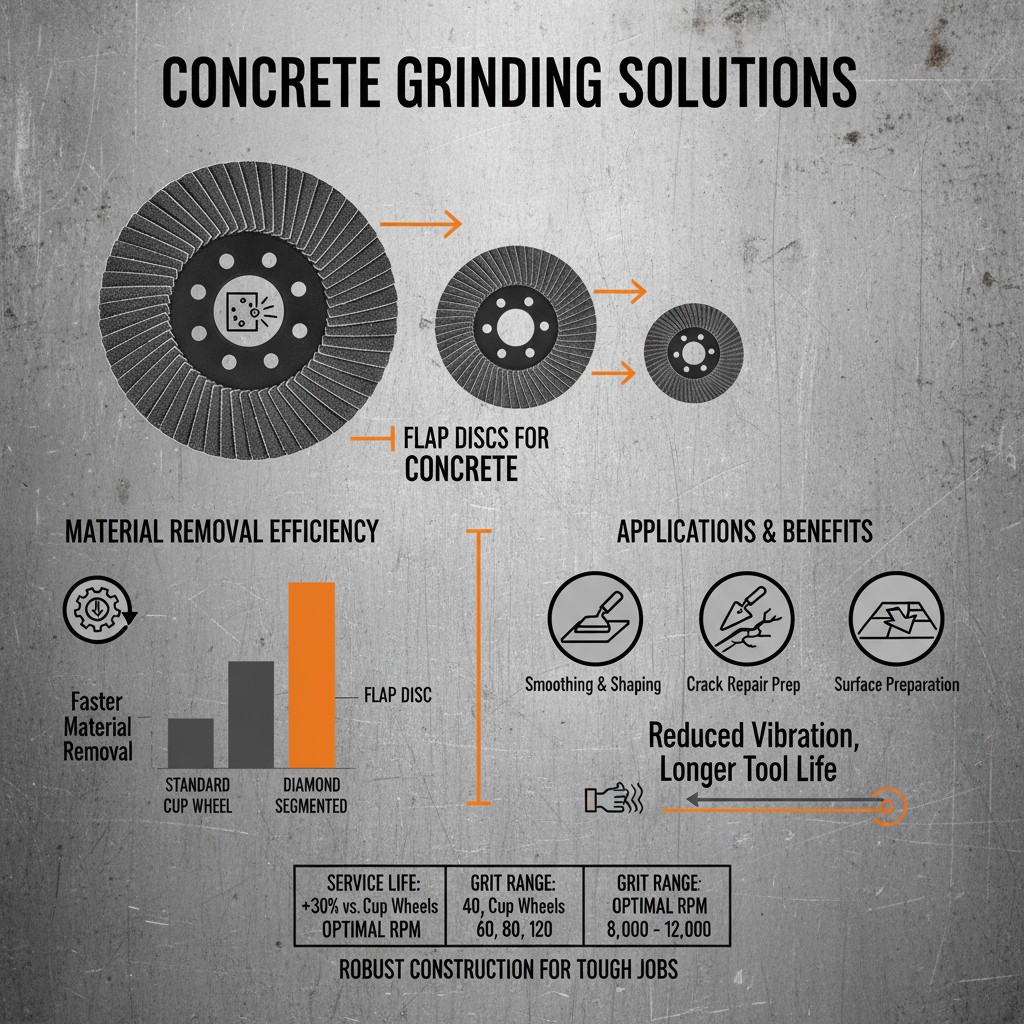
Product Specifications & Options from CutoffDiscs.com
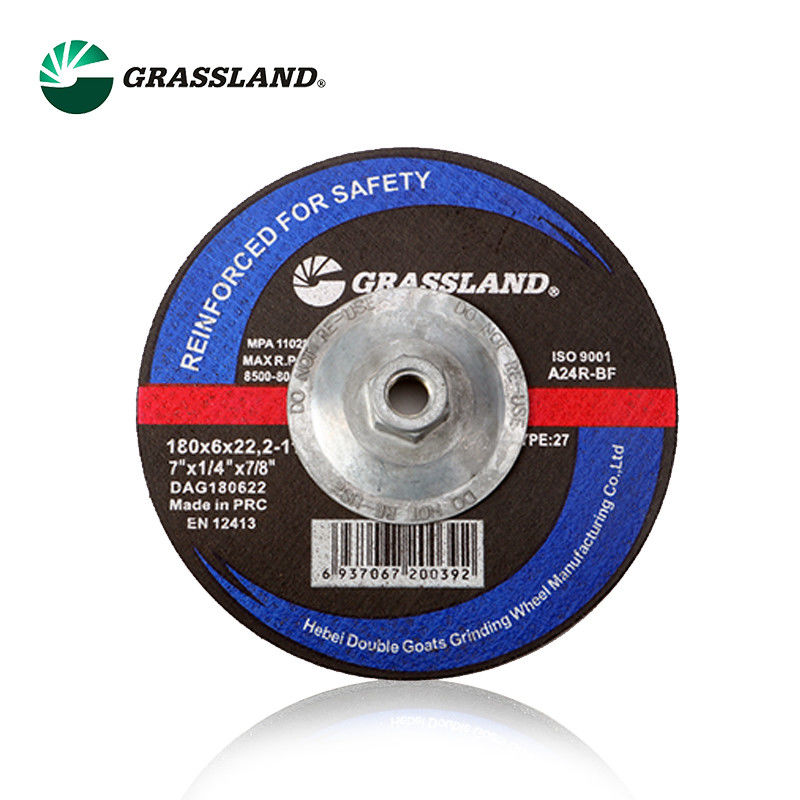
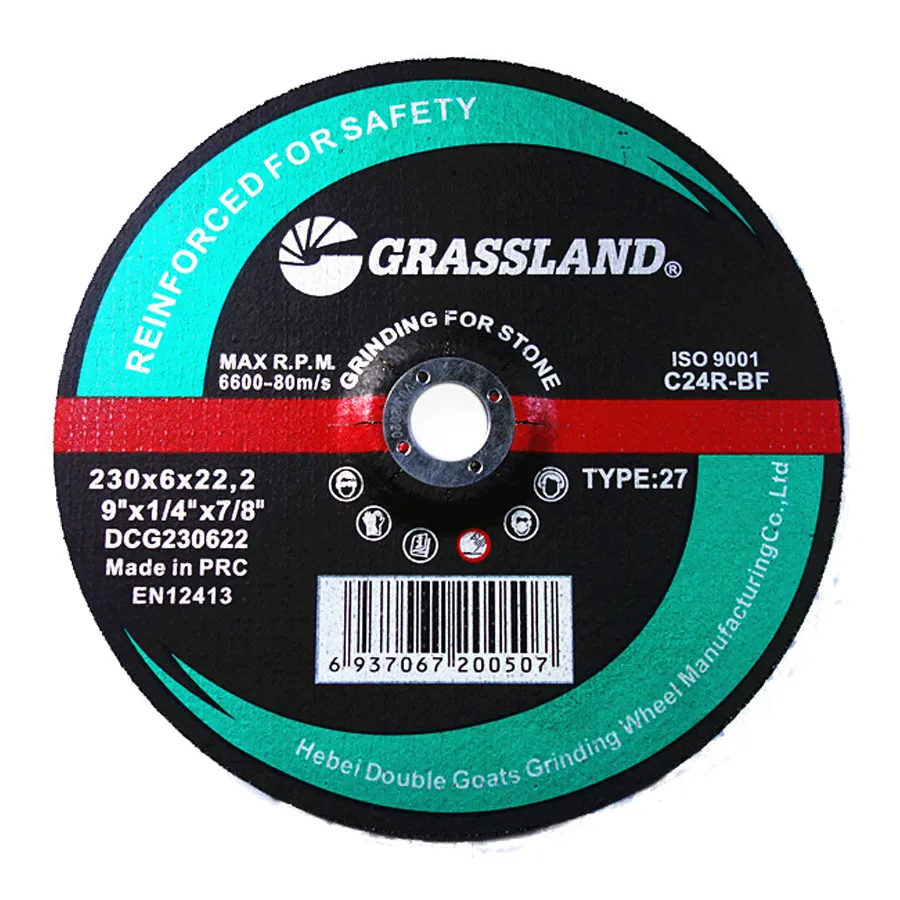
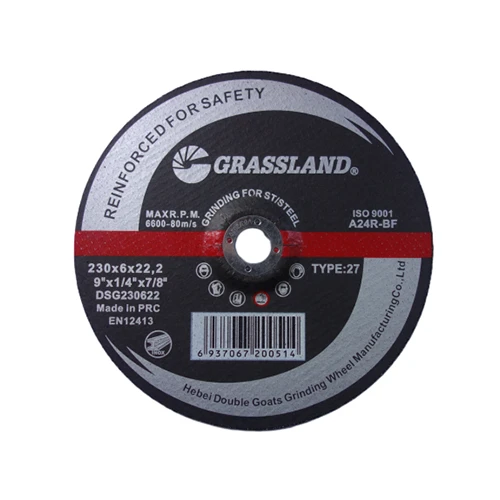
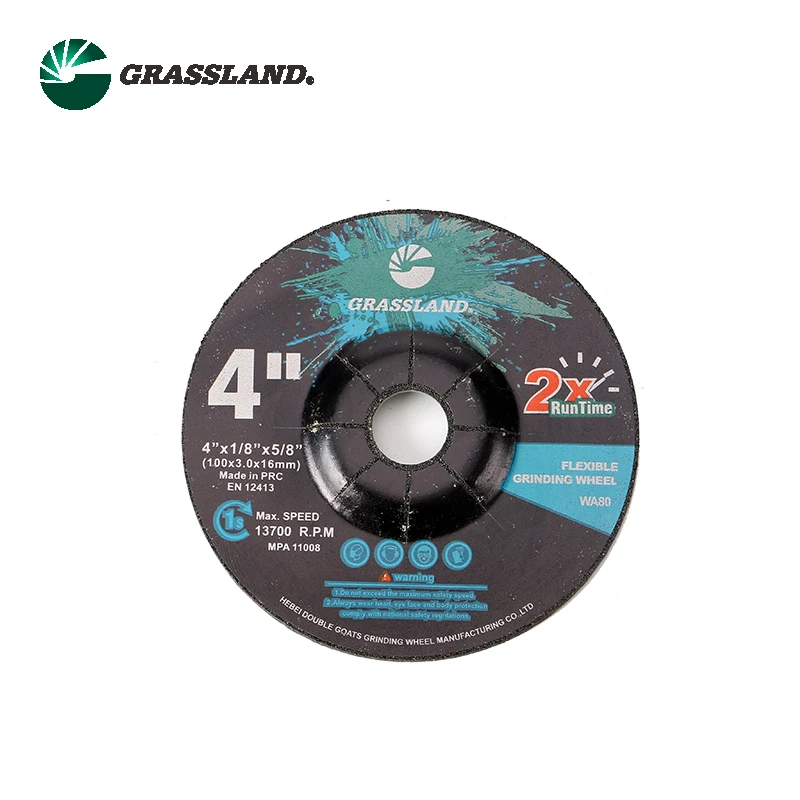
At CutoffDiscs.com, we offer a wide range of high-quality flap discs for concrete to meet your specific needs. We carry various grits, sizes, and backing materials. Here’s a snapshot of our offerings:
Conclusion: Achieve Professional Results with the Right Flap Disc
Choosing the right flap disc for concrete is essential for efficient and high-quality results. Consider the project requirements, the type of concrete, and the desired finish. With the information provided in this guide, you can confidently select the optimal disc for your needs. Explore our extensive selection at CutoffDiscs.com and experience the difference!
Frequently Asked Questions (FAQs)
What’s the difference between aluminum oxide and silicon carbide flap discs for concrete?
Aluminum oxide discs are more versatile and cost-effective for general-purpose concrete grinding and blending. They wear down more gradually and are suitable for a wide range of concrete types. Silicon carbide discs are harder and more aggressive, making them ideal for grinding harder concrete, removing coatings, or achieving a faster cutting rate. However, they wear down more quickly and can be more expensive. For most concrete projects, aluminum oxide is a good starting point, but silicon carbide is beneficial for tougher applications.
How long should a flap disc last on concrete?
The lifespan of a flap disc depends on several factors, including the type of concrete, the grit of the disc, the pressure applied, and the duration of use. A coarser grit disc will wear down faster than a finer grit disc. Generally, a flap disc can last anywhere from a few hours to a full day of continuous use. Replace the disc when the flaps become excessively worn, torn, or clogged. Regularly inspect the disc for damage and replace it promptly to ensure safety and performance.
Can I use a flap disc on rebar?
While flap discs can remove some material from rebar, they are not designed for cutting or grinding rebar extensively. Attempting to do so will quickly wear down the disc and may pose a safety hazard. For cutting or grinding rebar, use a dedicated abrasive disc specifically designed for metal cutting. Using the wrong disc can lead to premature wear, disc failure, and potential injury.
Post time:Feb - 27 - 2026