Unmounted Flap Wheel: The Ultimate Guide to Versatile Finishing
In the world of industrial grinding and surface finishing, efficiency and precision are the keys to a high-quality end product. The unmounted flap wheel has emerged as a critical tool for professionals seeking a balance between aggressive material removal and a smooth finish. Unlike traditional mounted wheels, the unmounted version offers unparalleled flexibility, allowing users to customize the mandrel and fit the tool to specific machinery. Whether you are working on deburring, rust removal, or blending welds, understanding the nuances of this tool can significantly optimize your production workflow.
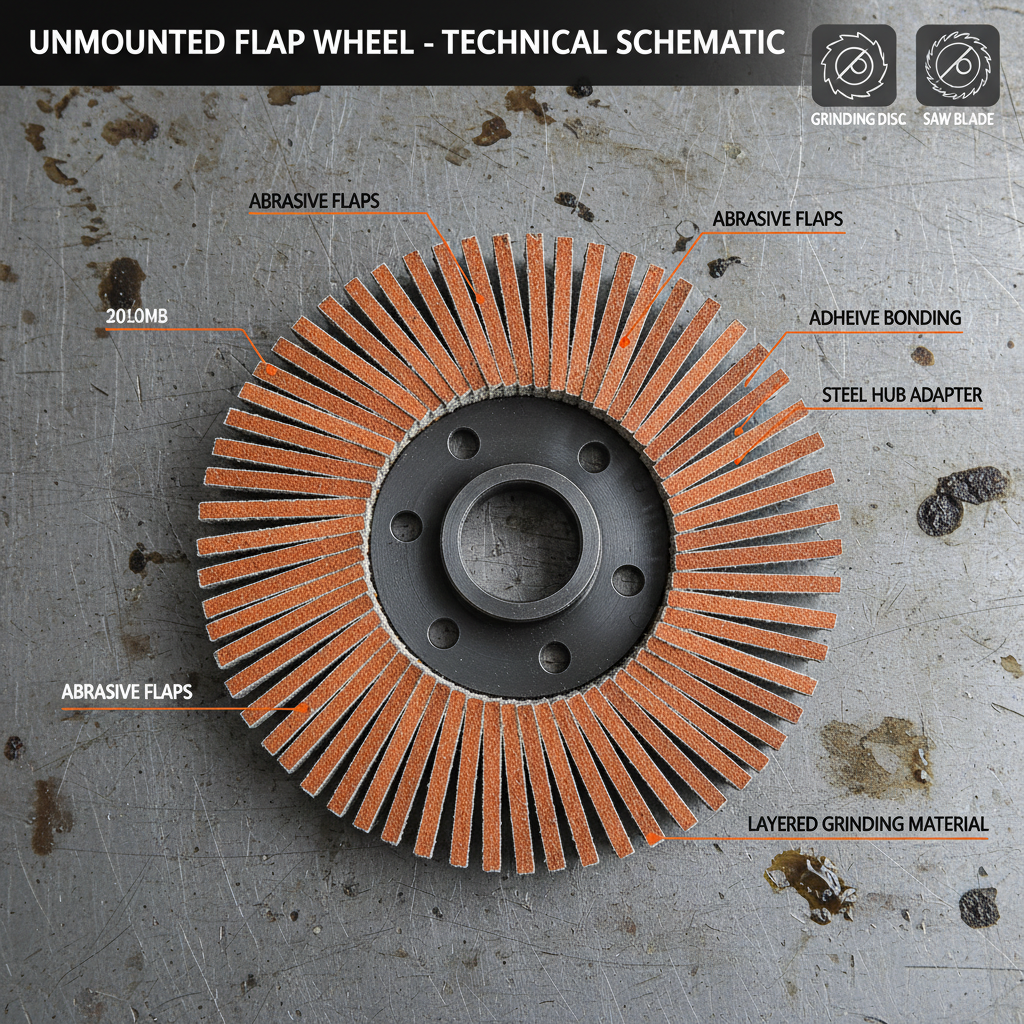
What Exactly is an Unmounted Flap Wheel?
An unmounted flap wheel consists of overlapping abrasive flaps arranged in a radial pattern, forming a wheel shape without a pre-installed center shaft or mandrel. This "blank" design is intentional, providing the operator with the freedom to mount the wheel on various spindles, pneumatic tools, or custom-made shafts. The primary advantage is the consistent renewal of the abrasive surface; as the top of the flap wears down, a fresh layer of abrasive is exposed, ensuring a steady cut rate throughout the life of the tool.
Pro Tip: Choosing the right grit size for your unmounted flap wheel is essential. Low grit (36-60) is best for heavy stock removal, while high grit (80-120) is ideal for fine finishing and polishing.
Key Advantages of Using Unmounted Flap Wheels
The shift toward using the unmounted flap wheel in modern workshops is driven by its adaptability. Because they lack a fixed core, they are easier to store in bulk and can be adapted to specialized industrial machinery that standard mounted wheels cannot fit. Furthermore, the flap design prevents "clogging" or "loading" more effectively than solid grinding wheels, as dust and debris are thrown out by centrifugal force. This results in cooler cutting temperatures, which reduces the risk of burning the workpiece or causing thermal distortion in sensitive metals.
Operational Benefits:
• Customizable Fit: Adaptable to any mandrel size.
• Extended Lifespan: Continuous exposure of fresh abrasive grains.
• Surface Quality: Provides a blended finish that requires less manual sanding.
• Safety: Lower risk of shattering compared to vitrified wheels.
Unmounted Flap Wheel vs. Traditional Grinding Wheels
When comparing an unmounted flap wheel to a traditional solid grinding wheel, the difference in surface interaction is stark. Traditional wheels are rigid and aggressive, which can often lead to "gouging" if the operator is not experienced. Flap wheels, conversely, have a degree of "give" or flexibility, which allows them to contour to the shape of the workpiece. This makes them far superior for concave surfaces or complex geometries where a flat wheel would leave uneven marks.
Industrial Applications of the Unmounted Flap Wheel
The utility of the unmounted flap wheel spans multiple sectors. In the automotive industry, they are indispensable for smoothing out welds on chassis and body panels without removing too much base metal. In aerospace, where precision is non-negotiable, these wheels are used to deburr titanium and aluminum components. Furthermore, the furniture industry employs them for rounding the edges of metal frames. Because they can be mounted on various power tools, they are the go-to choice for rapid prototyping and custom fabrication where tools must be changed quickly to suit different part sizes.
Technical Specifications for Selection
Selecting the right unmounted flap wheel requires attention to the abrasive material and the density of the flaps. Zirconia Alumina is generally preferred for stainless steel due to its toughness, while Aluminum Oxide is the standard for carbon steel and wood. The "flap density"—the number of overlapping layers—determines the wheel's lifespan and the smoothness of the finish. Higher density typically leads to a more refined surface but may generate slightly more heat if used at incorrect speeds.
Maintenance and Safety Guidelines
To maximize the efficiency of your unmounted flap wheel, it is critical to ensure that the wheel is perfectly centered on the mandrel to avoid vibration. Excessive vibration not only ruins the surface finish but can lead to premature tool failure. Always wear appropriate PPE, including safety goggles and dust masks, as the high-speed rotation of the flaps generates significant particulate matter. Periodically check the flaps for signs of fraying or detachment; if the wheel becomes unbalanced, replace it immediately to maintain operational safety.
Conclusion: Elevating Your Finish with the Right Tools
The unmounted flap wheel is more than just a grinding accessory; it is a versatile solution for any workshop aiming for professional-grade finishes. By combining the aggressive power of traditional abrasives with the flexibility of a flap design, it allows for a more intuitive and efficient finishing process. Investing in high-quality unmounted wheels ensures that your production line remains fast, your operators remain safe, and your products meet the highest industry standards. Upgrade your tooling today for a smoother tomorrow.
Frequently Asked Questions (FAQs)
What is the main difference between mounted and unmounted flap wheels?
The primary difference lies in the center attachment. A mounted flap wheel comes with a pre-installed mandrel or shaft, making it ready for immediate use in standard drills or die grinders. An unmounted flap wheel is a "blank" abrasive disk. This allows industrial users to fit the wheel onto specialized machinery, custom-sized spindles, or high-volume automated grinding systems. The unmounted version is generally preferred in large-scale manufacturing where equipment is specialized and versatility in mounting is required to ensure the tool fits the exact dimensions of the machine spindle.
Which abrasive material should I choose for stainless steel?
For stainless steel, Zirconia Alumina is the highly recommended choice. Stainless steel is a "gummy" metal that can easily clog standard aluminum oxide abrasives. Zirconia is a self-sharpening material that fractures under pressure to reveal new, sharp edges, which allows it to cut through tougher alloys more efficiently. This reduces the amount of heat generated, which is crucial for stainless steel to prevent discoloration or "bluing" of the metal. If you are performing very light polishing, a fine-grit ceramic flap wheel can also provide an exceptional mirror-like finish.
How do I prevent my flap wheel from wearing out too quickly?
The most common cause of premature wear is applying excessive pressure. Because a flap wheel is designed to be self-renewing, you should let the abrasive do the work. Applying too much force crushes the flaps and generates excessive heat, which can melt the bonding agent and cause the wheel to disintegrate. Additionally, ensuring the wheel is running at the correct RPM—neither too slow (which causes "digging") nor too fast (which causes burning)—will extend the tool's life. Using the correct grit for the specific material also ensures that the tool operates in its optimal efficiency range.
Can unmounted flap wheels be used on wood or plastic?
Yes, unmounted flap wheels can be used on wood and plastics, provided you use the correct grit. Aluminum Oxide is typically the best abrasive for these softer materials. For wood, they are excellent for rounding edges or smoothing contours. However, be cautious with plastics; because flap wheels generate friction, using a grit that is too coarse or running the tool at too high a speed can cause the plastic to melt rather than be sanded. We recommend starting with a higher grit (80 or 120) and using a light touch to achieve a clean, smooth surface without thermal damage.
Post time:Apr - 09 - 2026