Understanding Grinder Flap Discs: A Comprehensive Guide
Grinder flap discs are essential tools in metalworking, offering versatility in grinding, blending, and finishing operations. These discs utilize overlapping abrasive flaps attached to a backing plate, providing a consistent finish and longer lifespan compared to traditional grinding wheels. Choosing the right flap disc depends on the material being worked, the desired finish, and the grinder being used. At Cutoffdiscs.com, we provide a wide range of high-quality grinder flap discs to meet diverse industrial needs. Understanding the nuances of these tools is key to maximizing efficiency and safety.

What is a Grinder Flap Disc?
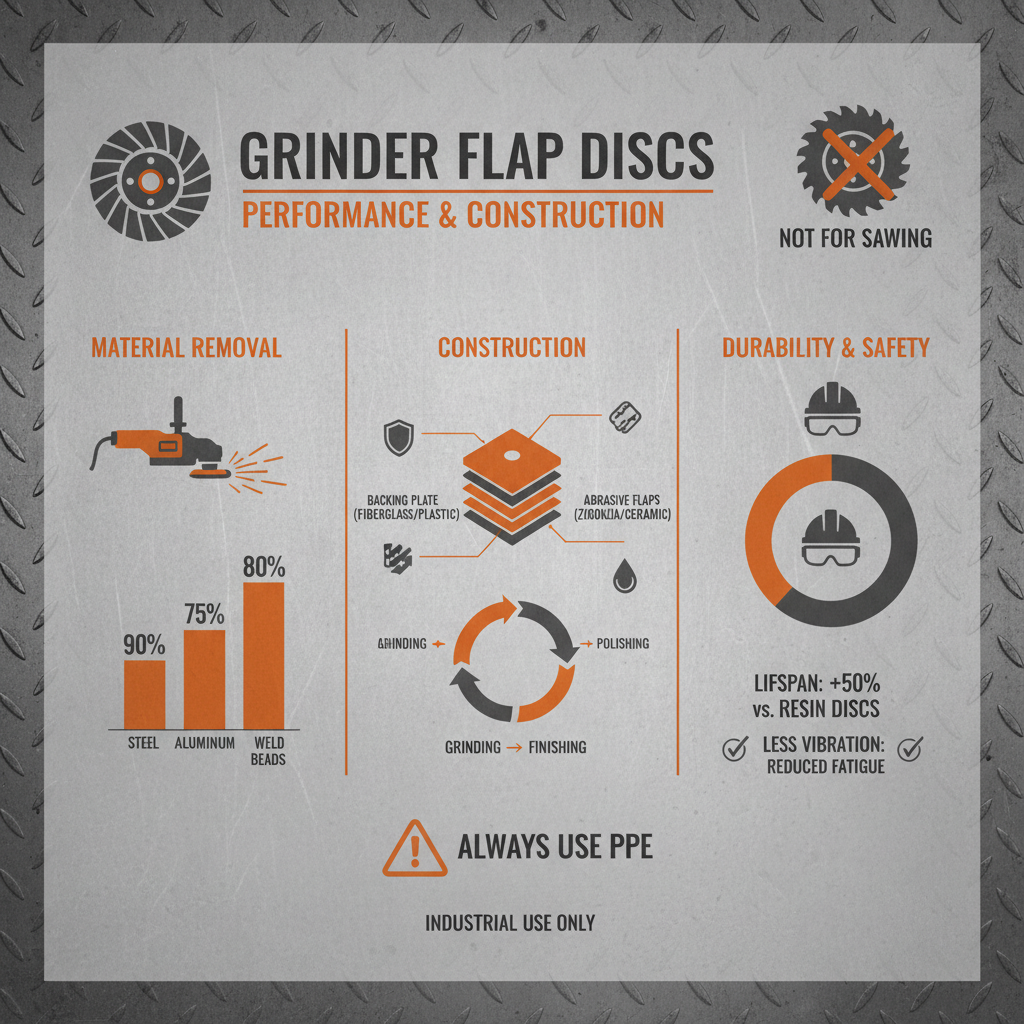
A grinder flap disc consists of abrasive flaps bonded to a durable backing plate, typically made of fiberglass or resin. These flaps are arranged in a staggered pattern, creating a flexible grinding surface that conforms to the workpiece's shape. This design distributes the grinding pressure evenly, reducing the risk of gouging and providing a smoother finish. The abrasive material used in the flaps varies, with common options including aluminum oxide, silicon carbide, and ceramic grains. Each material is suited to different applications and materials. They are commonly used for deburring, weld grinding, blending, and removing imperfections from metal surfaces.
Key Highlights: Distributes grinding pressure evenly, reducing gouging. Available in a variety of abrasive materials to suit different applications. Provides a smoother finish compared to traditional grinding wheels.
Choosing the Right Grinder Flap Disc: Abrasive Grain Types
The type of abrasive grain significantly impacts a flap disc's performance. Aluminum oxide is the most common and versatile option, suitable for mild steel, stainless steel, and aluminum. Silicon carbide is harder and performs exceptionally well on non-ferrous metals like glass and stone. Ceramic grains are highly durable and ideal for aggressive grinding and stock removal, especially on harder materials. Selecting the appropriate grain type extends the disc’s life and enhances the quality of the finish. Cutoffdiscs.com offers a detailed guide to help you choose the optimal grain for your specific needs.
Abrasive Grain Comparison:
• Aluminum Oxide: Versatile, suitable for steel and aluminum.
• Silicon Carbide: Excellent for non-ferrous metals and glass.
• Ceramic: Aggressive grinding and long lifespan.
Grinder Flap Disc Grit and Application
The grit number indicates the size of the abrasive particles. Lower grit numbers (e.g., 36, 60) are coarser and used for aggressive material removal and weld grinding. Medium grit numbers (e.g., 80, 120) are ideal for blending and deburring. Higher grit numbers (e.g., 180, 240) provide a finer finish and are used for polishing and surface preparation. Selecting the correct grit is crucial for achieving the desired result. Using too coarse a grit can leave deep scratches, while too fine a grit may not remove material quickly enough. You can find more details and a helpful grit selection chart on our website.
Safety Considerations When Using Grinder Flap Discs
Safety is paramount when using grinder flap discs. Always wear appropriate personal protective equipment (PPE), including safety glasses, a face shield, gloves, and hearing protection. Ensure the workpiece is securely clamped to prevent movement during grinding. Never exceed the maximum operating speed of the disc, as this can lead to breakage. Inspect the disc for damage before each use and discard any discs that are cracked, chipped, or worn. Proper ventilation is also essential to avoid inhaling abrasive dust. Always adhere to the manufacturer’s safety guidelines and follow established safety protocols.
Conclusion: Choosing the Right Flap Disc for Optimal Results
Selecting the right grinder flap disc involves understanding the material being worked, the desired finish, and the appropriate grit and abrasive grain. Cutoffdiscs.com offers a comprehensive range of high-quality flap discs, along with expert advice to help you make the best choice for your application. Investing in the right tools and prioritizing safety will ensure efficient and effective grinding operations.
Frequently Asked Questions (FAQs)
What is the maximum RPM I should use with a flap disc?
Always check the flap disc's labeling for the maximum operating speed (RPM). Exceeding this speed can cause the disc to break apart, leading to serious injury. The grinder itself will also have a maximum RPM rating – ensure the disc’s RPM does not exceed this limit. Typically, flap discs are rated for speeds up to 13,300 RPM, but always verify the specific disc’s specifications. Cutoffdiscs.com provides clear RPM information for each product.
How long can I expect a flap disc to last?
The lifespan of a flap disc depends on several factors, including the material being ground, the pressure applied, and the abrasive grain. Generally, a well-maintained flap disc can last for several hours of continuous use. Signs of wear include reduced grinding performance, excessive heat buildup, and visible damage to the flaps. Regularly inspect the disc and replace it when performance degrades or damage is observed.
Can flap discs be used on stainless steel?
Yes, flap discs can be used on stainless steel, but it’s crucial to choose a disc specifically designed for stainless steel applications. These discs often feature abrasive grains like silicon carbide or specialized blends to prevent loading and discoloration. Aluminum oxide discs can also be used, but they may require more frequent replacement. We stock a selection specifically for stainless steel.
What is the difference between a Type 1 and Type 29 flap disc?
Type 1 flap discs are flat and are suitable for general-purpose grinding and blending on flat surfaces. Type 29 discs are conical or angled, designed for edge work, contour grinding, and reaching tight spaces. The angled shape allows for better access and control when working on curved or irregular surfaces. Choosing the appropriate type depends on the specific application and the geometry of the workpiece.
Post time:Mar - 12 - 2026