Advancements in Abrasive Technology: The Evolving Landscape of Metal Cutting Discs
The industrial landscape is continuously evolving, driven by demands for increased efficiency, precision, and safety. In metal fabrication and construction, the tool at the heart of initial material processing is often the abrasive cutting disc. The market for metal cut off blade technology is witnessing significant trends focused on enhanced material science, automated manufacturing processes, and specialized application-specific solutions. Innovations are leading to longer-lasting blades, reduced kerf widths for minimal material loss, and formulations that generate less heat, thereby preserving workpiece integrity and extending tool life.
The demand for high-performance metal cut off blade solutions is particularly pronounced in industries handling high-strength alloys and composite materials, where traditional abrasive methods often fall short. Manufacturers are responding with discs featuring advanced abrasive grain structures, such as zirconia alumina and ceramic alumina, bonded with superior resin systems. These developments are critical for maintaining competitive edges in sectors where material processing speed and cost-efficiency are paramount.
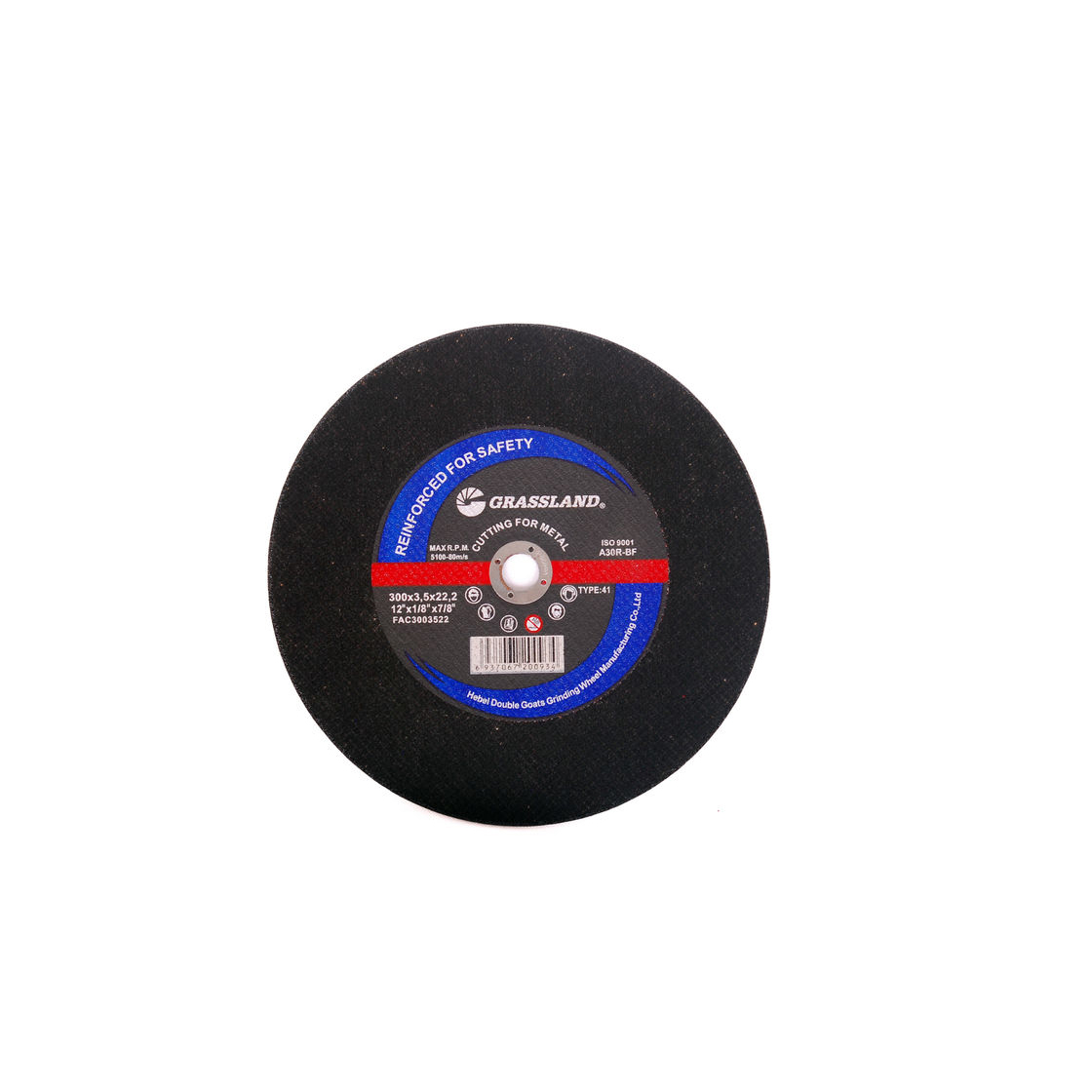
Technical Specifications: 300mmx3.5x25.4mm Chop Saw 12 Inch Metal Cut Off Blade
Our 300mmx3.5x25.4mm Chop Saw 12 Inch metal cut off blade is engineered for industrial-grade performance, designed to meet the rigorous demands of heavy-duty metal fabrication. This specific configuration provides an optimal balance between aggressive cutting action and extended operational life, making it a preferred choice for professionals utilizing chop saws and stationary abrasive cutting machines.
| Parameter | Specification |
|---|---|
| Product Name | 300mmx3.5x25.4mm Chop Saw 12 Inch Metal Cut Off Blade |
| Outer Diameter | 300mm (12 inches) |
| Thickness (Kerf) | 3.5mm |
| Arbor Hole Diameter | 25.4mm (1 inch) |
| Abrasive Material | Premium Aluminum Oxide (Al₂O₃) or Zirconia Alumina (ZA) |
| Bond Type | Proprietary Resinoid Bond |
| Reinforcement | Dual High-Tensile Fiberglass Mesh |
| Maximum RPM | 5100 RPM |
| Application | Cutting steel, stainless steel, structural steel, iron, and various metal profiles |
| Standards Compliance | ISO 9001, EN12413, ANSI B7.1 |
The choice of abrasive grain, typically aluminum oxide for general purpose and zirconia alumina for stainless steel and harder alloys, combined with a carefully selected resinoid bond, dictates the cutting efficiency, heat generation, and overall life of the cut off blade for metal. Our blades feature a robust dual fiberglass reinforcement system, critical for maintaining structural integrity and preventing shattering at high rotational speeds, thereby ensuring operator safety and consistent cutting performance.
Manufacturing Process: Precision Engineering for Superior Performance
The production of a high-quality metal cutting disc for chop saw is a multi-stage process, demanding meticulous control at each step to ensure consistent performance, durability, and safety. Our manufacturing adheres strictly to international standards like ISO 9001 and EN12413.
Process Flow Diagram:
- 1. Material Selection & Preparation: Sourcing high-purity abrasive grains (e.g., corundum, silicon carbide), proprietary resin binders, and high-tensile fiberglass reinforcement mesh. Quality checks ensure raw material consistency.
- 2. Mixing & Blending: Abrasive grains are precisely mixed with liquid and powdered resin binders and other additives. This step is critical for achieving the desired bond strength, flexibility, and cutting characteristics of the final metal cut disc.
- 3. Forming & Pressing: The mixed abrasive compound is layered with fiberglass reinforcement mesh in molds. Hydraulic presses apply immense pressure to form the discs into their precise dimensions (e.g., 300mm diameter, 3.5mm thickness, 25.4mm arbor hole).
- 4. Curing & Baking: The pressed discs undergo a controlled thermal curing process in specialized ovens. This step hardens the resin bond, setting the abrasive grains in place and giving the disc its final structural integrity and abrasive properties. Precise temperature and time control are vital.
- 5. Finishing & Quality Control: Each blade is individually inspected for dimensional accuracy, concentricity, balance, and visual defects. Burst strength tests are performed on samples to ensure safety limits are met (e.g., exceeding 1.5 times the maximum operational speed). Adherence to standards like EN12413 for safety and ISO for quality is verified.
- 6. Labeling & Packaging: Approved discs are labeled with essential information (size, RPM, safety warnings) and packaged to protect them during transit and storage.
Our stringent adherence to these manufacturing protocols ensures that every metal cut off blade consistently delivers superior performance and reliability.
Key Technical Advantages and Application Scenarios
Our 300mm metal cut off wheel for circular saw and chop saw applications offers a multitude of technical advantages that translate directly into operational benefits across various demanding industries.
Technical Advantages:
- Optimized Abrasive-to-Bond Ratio: Engineered for aggressive material removal with minimal heat generation, preventing workpiece discoloration and distortion, and enhancing energy efficiency during cutting operations.
- Exceptional Service Life: Advanced bonding technology and high-density abrasive packing contribute to significantly extended blade life, reducing changeover times and consumable costs. This directly translates to lower operational expenditure per cut.
- High Burst Strength & Safety: Exceeds international safety standards (EN12413, ANSI B7.1) due to superior fiberglass reinforcement, significantly mitigating risks associated with blade failure.
- Precision and Clean Cuts: The uniform abrasive distribution and controlled grain fracture result in cleaner, burr-free cuts, reducing the need for secondary finishing processes.
- Corrosion Resistance Benefits: For specific applications, our blades are designed to produce minimal heat and contamination, crucial when cutting stainless steel and other corrosion-resistant alloys, ensuring the integrity of the material is maintained.
Typical Application Scenarios:
- Petrochemical Industry: Cutting pipes, tubes, and structural steel components used in refineries, pipelines, and chemical processing plants, where precision and material integrity are paramount.
- Metallurgy & Steel Fabrication: Processing various steel profiles, beams, channels, and plates in steel mills, fabrication shops, and foundries. The blades excel in cutting both carbon and alloy steels efficiently.
- Water Supply & Drainage Systems: Cutting large diameter metal pipes, fittings, and associated structural elements for infrastructure projects, requiring robust and durable cutting solutions.
- Construction & Infrastructure: Cutting rebar, conduits, angle iron, and other construction materials on job sites where speed and reliability are crucial for project timelines.
- Automotive & Shipbuilding: Used in the repair, modification, and new construction of vehicles and marine vessels, demanding precise cuts on various metal types.
Vendor Comparison and Customized Solutions
Selecting the right vendor for metal cut off blade technology is a strategic decision that impacts operational efficiency, safety, and overall project costs. While many suppliers offer abrasive discs, a true industry partner distinguishes itself through product quality, technical support, and the ability to provide tailored solutions.
Key Differentiators in Vendor Comparison:
| Feature/Criterion | Generic Vendor | Leading Specialist Vendor (e.g., Us) |
|---|---|---|
| Abrasive Quality | Standard industrial-grade aluminum oxide. | Premium virgin aluminum oxide, zirconia alumina, or ceramic grains for optimized performance and longevity. |
| Bonding Technology | Basic resinoid bond, prone to premature wear or crumbling. | Advanced proprietary resin systems, engineered for consistent grain retention and efficient self-sharpening. |
| Reinforcement | Single layer or lower-grade fiberglass mesh, potential safety risks. | Dual or triple high-tensile fiberglass mesh for maximum safety and structural integrity at high RPMs. |
| Consistency & QC | Variable product quality, basic testing. | Rigorous multi-stage quality control (ISO, EN, ANSI compliant), 100% inspection, batch traceability. |
| Technical Support | Limited technical guidance. | Dedicated engineering support, application specialists, on-site consultation for optimal tool selection. |
| Customization | Minimal or no customization options. | Extensive customization for specific material, machine, or process requirements. |
Customized Solutions:
Recognizing that standard products do not always suffice for unique industrial challenges, we offer comprehensive customization services for metal cut off blade applications. This includes:
- Specific Dimensions: Tailoring outer diameter, thickness (kerf), and arbor hole to perfectly match bespoke machinery or unique cutting requirements.
- Optimized Abrasive Formulations: Developing custom abrasive blends and bond types for extremely challenging materials such as superalloys, exotic metals, or applications demanding specific surface finishes or heat characteristics.
- Specialized Reinforcement: Adjusting the number and type of reinforcement layers for applications requiring enhanced safety margins or higher side-load resistance.
- Private Labeling & Packaging: Offering branded solutions with custom packaging to align with client’s specific branding and distribution needs.
Our engineering team collaborates closely with clients to analyze their cutting operations, identify pain points, and design a metal cut off blade that precisely meets their performance metrics and cost-efficiency goals.
Application Case Studies & Customer Experience
Our commitment to delivering superior abrasive solutions is validated by the success of our clients. Here are examples of how our 300mmx3.5x25.4mm metal cut off blade has made a tangible impact:
Case Study 1: Large-Scale Pipeline Fabrication
A major engineering firm specializing in petrochemical pipeline construction faced challenges with inconsistent cutting performance and premature wear of their existing chop saw blades when processing high-strength low-alloy (HSLA) steel pipes. Their operational data indicated excessive blade consumption, leading to frequent changeovers and downtime.
- Solution: We provided our 300mmx3.5x25.4mm metal cut off blade, featuring a specialized zirconia alumina abrasive for aggressive yet smooth cutting of tough materials.
- Results: The client reported a 35% increase in blade life per disc and a 15% reduction in cutting time per pipe section. The improved precision also significantly reduced post-cut deburring operations, contributing to a 20% overall reduction in processing time for critical pipeline segments. This equated to substantial cost savings and accelerated project completion.
Case Study 2: Automotive Component Manufacturing
An automotive parts manufacturer required precise, burr-free cuts on stainless steel exhaust components. Their previous cut off blade for metal solution caused excessive heat build-up, leading to metallurgical changes and increased rework due to thermal discoloration.
- Solution: We introduced a customized version of our 12-inch metal cut off blade with a specific blend of abrasive grains and a cooler-cutting resin bond, designed to minimize heat transfer into the workpiece.
- Results: The client observed a dramatic reduction in heat-affected zones and eliminated thermal discoloration, slashing rework rates by 40%. The cleaner cuts also improved the efficiency of subsequent welding operations, validating the importance of application-specific abrasive selection.
Frequently Asked Questions (FAQ)
Q: What types of metals can this metal cut off blade effectively cut?
A: Our 300mmx3.5x25.4mm metal cut off blade is designed for high-performance cutting of a wide range of ferrous metals, including carbon steel, structural steel, alloy steel, stainless steel, and various iron profiles. Its robust construction makes it suitable for both general-purpose and specialized applications.
Q: How does the thickness (3.5mm) impact performance?
A: A 3.5mm thickness provides a balance between rapid material removal and blade durability. Thicker blades are generally more robust and have longer life for heavy-duty applications, while thinner blades (e.g., 2.5mm) offer faster cuts and less material loss but may be less durable for very demanding tasks. Our 3.5mm blade optimizes for sustained performance and reliability in industrial settings.
Q: What is the typical lead time for bulk orders?
A: Standard bulk orders for our 300mm metal cut off blade typically have a lead time of 2-4 weeks, depending on order volume and current production schedules. For customized solutions, lead times will be determined on a project-specific basis after detailed consultation and material sourcing, typically ranging from 4-8 weeks. We maintain robust inventory levels to support urgent requirements.
Q: What warranty and after-sales support do you offer?
A: We stand by the quality of our products with a comprehensive warranty against manufacturing defects. Our after-sales support includes dedicated technical assistance, troubleshooting services, and expert advice on optimizing blade usage for your specific applications. Our team is committed to ensuring maximum operational uptime and client satisfaction.
References
- ISO 9001: Quality management systems – Requirements. International Organization for Standardization.
- EN 12413: Safety requirements for bonded abrasive products. European Committee for Standardization.
- ANSI B7.1: Safety requirements for the use, care, and protection of abrasive wheels. American National Standards Institute.
- ASM International. (2001). ASM Handbook, Volume 16: Machining. ASM International.
- Klocke, F., & König, W. (2006). Manufacturing Process 2: Grinding, Honing, Lapping. Springer.
Post time:Sep - 19 - 2025