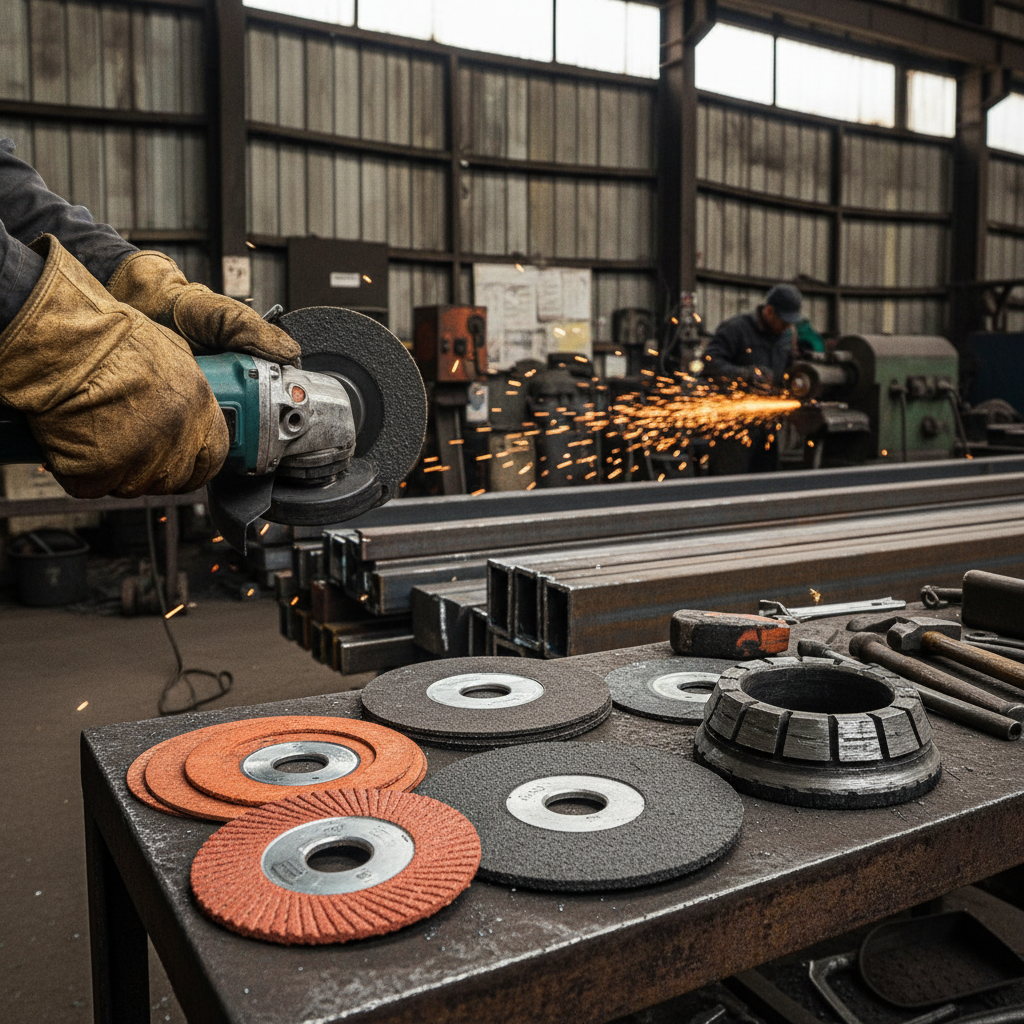
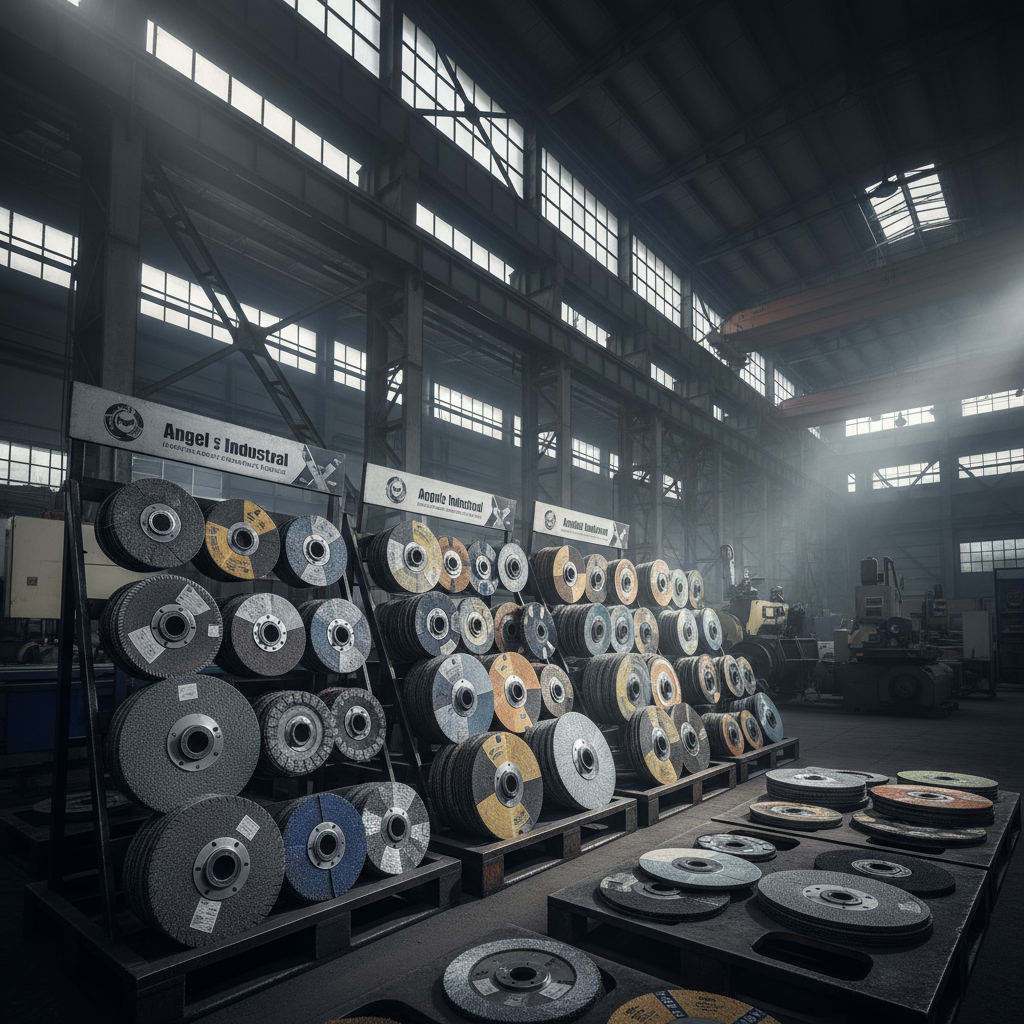
The global demand for precision surface finishing in ferrous and stainless steel fabrication has led to a critical re-evaluation of how procurement managers vet flap wheel suppliers. As industries shift toward more aggressive stock removal paired with fine finishing, the choice of abrasive grain and bonding technology has become a primary driver of operational efficiency.
The challenge lies in balancing the aggression of the abrasive with the integrity of the workpiece. Inferior consumables often lead to gouging, excessive vibration, or, in extreme cases, catastrophic disc failure due to poor balance or substandard bonding agents. For high-output industrial environments, the cost of a single failed disc far outweighs the marginal savings of low-tier sourcing.
This technical analysis examines the engineering criteria essential for selecting high-performance abrasive wheels, specifically focusing on Zirconium Oxide technology and safety compliance. By understanding the relationship between grit size, bond hardness, and rotational stability, operators can optimize their finishing workflows via professional flap wheel suppliers.


Zirconium Oxide is preferred in heavy-duty grinding due to its self-sharpening characteristic. Unlike aluminum oxide, which dulls over time, Zirconium grains fracture under pressure to reveal new, sharp cutting edges. This ensures a consistent material removal rate (MRR) across the lifespan of the disc.
When sourced from experienced flap wheel suppliers, these discs typically feature a resin bond that holds the abrasive flaps at a specific angle (such as the Type 29 15° style), optimizing the contact area for aggressive stock removal.
The effectiveness of a flap disc is governed by its grit size and hardness grade. For instance, a 36# grit is designated for aggressive removal of welds and heavy oxidation, whereas an 80# grit is utilized for final blending and surface preparation before coating. The hardness rating (e.g., Grade R) determines the rate at which the abrasive grains release from the resin bond.
Maximum working speeds are another critical constraint. A high-quality disc rated for 80 M/S must maintain structural integrity under centrifugal force. This requires precise resin curing and reinforcement, ensuring that the disc does not deform or shed flaps prematurely during high-RPM operation.
Furthermore, the arbor size and disc diameter (such as 180mm) must match the tool spindle perfectly. Any misalignment or oversized arbor hole can introduce eccentric rotation, leading to "chatter" marks on the workpiece and increased operator fatigue.
Rotational imbalance in abrasive wheels is a primary cause of both poor surface quality and mechanical wear on the grinder. Static balance tests are performed to ensure that the mass is distributed evenly around the center of rotation.
By utilizing fully automatic production equipment and precision testing units, top-tier flap wheel suppliers minimize this variance. The result is a smoother operation that allows the technician to control the grinding angle with greater accuracy.
Comparing Zirconium Oxide with standard Aluminum Oxide reveals a distinct advantage in longevity and cutting speed when working with hard alloys. The self-fracturing nature of Zirconia maintains a higher "active" grain count throughout the product's life.
The following assessment utilizes a normalized engineering score to evaluate different abrasive types across key operational metrics including cutting speed, durability, and finish consistency.
In typical industrial deployment, Zirconium flap discs are utilized in the aerospace and automotive sectors for deburring stainless steel components. A representative engineering scenario involves the removal of weld spatter from Inox piping, where a 180mm disc with 40# grit is used for initial leveling, followed by an 80# disc for surface blending.
The integration of these tools into a standardized workflow reduces the need for switching between separate grinding and sanding discs. By utilizing "grind and sand in one step" products from reputable flap wheel suppliers, shops can reduce labor time and improve throughput.
Safety in abrasive operations is non-negotiable. A broken grinding wheel can eject debris at speeds exceeding 80 mph, posing a lethal risk to the operator. Adherence to European safety standards, specifically EN 12413 and EN 13743, ensures that the product has undergone rigorous rotation strength and impact testing.
Quality control must begin with raw material inspection. Professional manufacturers employ a traceability system that monitors every stage from the incoming Zirconia grain to the final visual inspection. This "zero-defect" approach prevents the delivery of discs with micro-cracks or uneven bond distribution.
Operators should always inspect the spindle hole for damage and verify that the disc is not chipped before mounting. Using a test workpiece imported from target markets further ensures that the product complies with the actual hardness and stress requirements of the end-user's application.
Selecting the correct configuration depends on the material hardness and the desired final surface roughness. The trade-off between aggressive stock removal and surface finish is managed by adjusting the grit size and the angle of the flap arrangement.
The table below provides a technical comparison for different configuration profiles. Note that these represent engineering benchmarks for evaluating products from various flap wheel suppliers.
Buyers should align these profiles with their specific substrate (e.g., Mild Steel vs. Stainless Steel) and the required safety certifications for their region.
| Configuration Profile | Grit Size | Removal Rate | Recommended Use Case |
|---|---|---|---|
| Aggressive Heavy-Duty | 36# | Very High | Weld Removal / Heavy Rust |
| Standard Industrial | 40# | High | General Metal Leveling |
| Medium Finishing | 60# | Moderate | Surface Blending / Deburring |
| Precision Finishing | 80# | Low | Pre-Paint Preparation |
| Inox Specialized | Zirconia R | Consistent | Stainless Steel Polishing |
| Baseline Entry | Mixed AlOx | Variable | Light-Duty Maintenance |
Zirconium Oxide is a semi-ceramic abrasive that offers higher toughness and a self-sharpening mechanism. While Aluminum Oxide is suitable for softer metals, Zirconium is far more effective for stainless steel and hard ferrous metals, providing a faster cut rate and longer tool life by continuously exposing fresh cutting edges during the grinding process.
Type 29 discs have a built-in grinding angle (typically 15°), which allows for more aggressive stock removal and better control during heavy grinding. Type 27 discs are flat, making them more suitable for finishing large, flat surfaces where a consistent, perpendicular contact is required. Most industrial-grade discs for metalwork utilize the Type 29 design for versatility.
EN 12413 is a European safety standard that specifies the requirements for abrasive products. Compliance ensures that the disc has undergone rigorous strength tests, including burst speed tests and balance checks. Using non-certified discs increases the risk of catastrophic failure, which can lead to severe operator injury due to high-velocity debris.
Chatter marks are typically caused by rotational imbalance or excessive vibration. This often happens when the disc is not perfectly centered on the arbor or if the manufacturer failed to conduct a static balance test. Selecting products from suppliers that use fully automatic testing units significantly reduces this occurrence.
For stainless steel (Inox), start with a 40# or 60# grit for weld leveling to avoid deep gouges. Once the surface is level, transition to an 80# grit for blending. Because Inox work-hardens quickly, using a Zirconium abrasive is critical to maintain a cool cut and prevent surface discoloration (burning).
No. Flap discs are designed for grinding, deburring, and finishing. They lack the structural reinforcement and specific bonding required for cutting. For cutting tasks, a dedicated metal cutting disc or stainless steel cutting disc should be used to ensure operator safety and a clean cut.
The transition toward Zirconium Oxide abrasives represents a significant leap in surface finishing efficiency. By prioritizing rotational balance, adherence to EN 12413 standards, and a precise match between grit size and substrate hardness, industrial operators can achieve superior finish quality while minimizing risk.
For organizations looking to optimize their finishing workflows, evaluating the technical capabilities of flap wheel suppliers based on their quality traceability and production automation is essential. Selecting a high-performance solution like the Grassland series ensures a vibration-free experience and extended tool life across various ferrous and stainless steel applications.