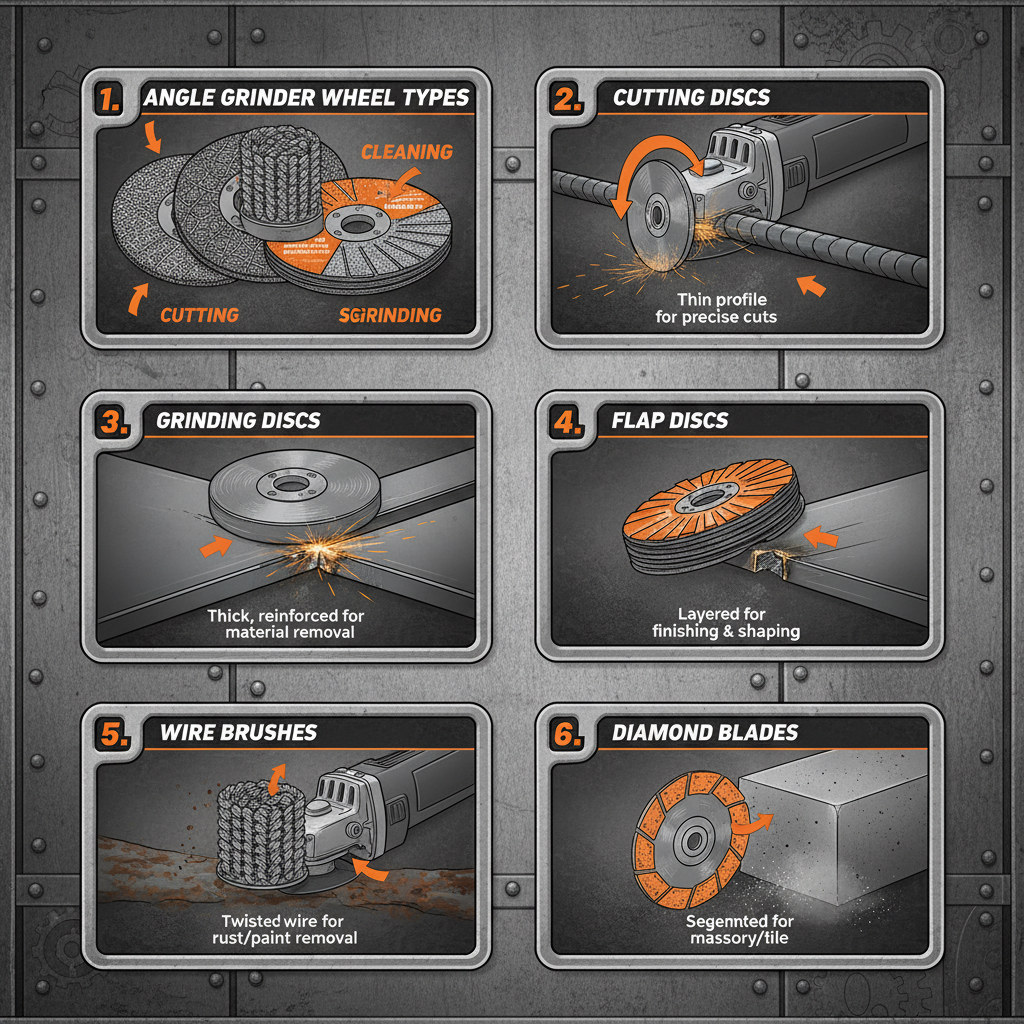
The surface finishing industry is currently witnessing a significant transition toward high-performance zirconia-based abrasives to meet the stringent demands of stainless steel and ferrous metal processing. As industrial precision increases, the role of professional flap wheel manufacturers has evolved from simple tool supply to providing engineered solutions that balance aggressive material removal with surface integrity.
This shift is primarily driven by the need to reduce cycle times and minimize workpiece deformation in heavy-duty grinding applications. The technical challenge lies in maintaining consistent abrasive grain exposure while ensuring the structural stability of the resin bond under high rotational speeds, often reaching 80 m/s in professional environments.
In this technical analysis, we examine the engineering logic behind zirconium oxide flap wheels, the critical safety standards governing their production, and the selection frameworks used by procurement engineers to optimize grinding efficiency.


The core efficiency of a flap wheel is determined by its abrasive grain and the bonding agent. Zirconium Oxide is preferred for stainless steel (Inox) and ferrous metals due to its self-sharpening characteristic. Unlike aluminum oxide, zirconia grains fracture in a way that continuously exposes new, sharp cutting edges during the grinding process.
The resin bond serves as the matrix that holds these grains. In high-end production, the balance between bond hardness and grain release is critical; a bond that is too hard leads to "glazing," while one that is too soft results in premature wheel wear.
When evaluating tools from flap wheel manufacturers, the grit size (ranging from 36 to 80) is the primary determinant of the surface finish. A 36-grit wheel is engineered for aggressive stock removal, whereas an 80-grit wheel is utilized for final blending and polishing.
The Max Working Speed, typically specified at 80 M/S, is a non-negotiable safety parameter. This value defines the centrifugal force limit the resin bond can withstand before structural failure occurs. Operating beyond this limit poses severe risks to the technician.
The "Type 29" geometry, featuring a 15° built-in grinding angle, allows the operator to maintain a consistent contact patch on the workpiece. This specific angle is designed to prevent gouging and undercutting, providing a more controlled removal rate compared to flat discs.
Thermal buildup is the primary enemy of surface integrity in metal grinding. Excessive heat can lead to workpiece discoloration or, in the case of stainless steel, cause localized tempering that alters the material's corrosion resistance.
Furthermore, the overlap of the flap design ensures that the abrasive material is not concentrated in one spot. This distribution allows for air cooling to penetrate the grinding zone, extending the overall service life of the tool.
Evaluating the relative performance of abrasive tools requires a normalized scoring system. Key metrics include material removal rate (MRR), grain longevity, and vibration stability. A well-balanced disc eliminates centrifugal fatigue, which is essential for long-shift industrial operations.
The following assessment compares different abrasive configurations based on their relative engineering efficiency in stainless steel applications.
In typical heavy-duty fabrication, zirconia flap wheels are deployed for weld seam leveling and edge rounding. The primary goal is to move from a raw weld to a finished surface in a single step, combining the grinding and sanding phases. This integration reduces tool change-over time and labor costs.
In aerospace or high-precision automotive components, the focus shifts to "non-aggressive" finishing. Here, higher grit counts (60-80) are used to ensure that the material removal does not exceed specified tolerances, while the balanced nature of the disc prevents vibration-induced surface ripples.
The safety of abrasive wheels is governed by strict international standards such as EN 12413. Because a wheel failure at 8,500 RPM can eject debris at speeds exceeding 100 mph, rigorous quality control is mandatory. Static balance tests are performed to ensure the disc does not wobble during operation.
Rotary strength tests verify that the bond can withstand the specified maximum working speed. Additionally, visual inspections are conducted to ensure there are no cracks, chips, or unevenness in the flap arrangement, as any imbalance can lead to catastrophic failure.
Professional quality systems implement full traceability from raw material inspection to the finished product. This ensures that every batch of discs can be traced back to the specific material lot and production line, providing a critical layer of accountability for industrial users.
Selecting the correct tool from flap wheel manufacturers depends on the trade-off between removal rate and surface quality. Procurement managers should categorize their needs based on the material hardness and the required final Ra value.
The following matrix provides a technical guideline for matching tool configurations to specific industrial application profiles.
By adhering to this framework, operators can maximize the life of the abrasive and minimize the risk of workpiece damage.
| Configuration Type | Grit Specification | Material Removal Rate | Recommended Use Case |
|---|---|---|---|
| Coarse-Duty | 36# Grit | High | Heavy Weld Removal |
| Standard-Duty | 40# Grit | Medium-High | General Deburring |
| Medium-Finish | 60# Grit | Medium | Surface Blending |
| Fine-Finish | 80# Grit | Low | Final Polishing |
| Precision Profile | Custom Mix | Controlled | Aerospace Finishing |
| Industrial Baseline | Zirconia Oxide | Optimized | Stainless Steel (Inox) |
Zirconium Oxide possesses a crystalline structure that promotes micro-fracturing. As the abrasive grain wears down, it breaks away to reveal new, sharp edges rather than dulling completely. This self-sharpening effect results in a higher material removal rate and lower heat generation, making it far superior for hard metals and stainless steel compared to standard aluminum oxide.
The Type 29 design features a 15-degree conical angle. This allows the user to grind with the edge of the disc for aggressive stock removal or the face for a smoother finish. The built-in angle reduces the likelihood of the tool "digging in" to the workpiece, which significantly lowers the risk of gouging or creating uneven depressions in the metal.
Premature wear is usually caused by excessive pressure or incorrect grit selection. Applying too much force can "load" the disc, where metal particles fill the gaps between grains, causing the wheel to glaze. Conversely, using a grit that is too fine for heavy stock removal forces the grains to work beyond their capacity, leading to rapid breakdown of the resin bond.
Operators must check the spindle hole for any damage or deformation, as an improper fit can cause severe vibration. The disc should be visually inspected for cracks or missing flaps. Any wheel that appears chipped or uneven should be discarded immediately to prevent centrifugal imbalance and potential safety accidents during high-speed rotation.
European safety standard EN 12413 and ISO9001 are the benchmarks for quality. These standards mandate rigorous testing for burst strength and rotational stability. Compliance ensures that the wheel can safely operate at its maximum rated speed (e.g., 80 m/s) without disintegrating, protecting the operator from high-velocity debris.
The choice depends on the objective. If the goal is to remove a weld bead or flatten a protrusion, 40 grit is required for its aggressive cutting action. If the goal is to remove scratches left by previous grinding or to achieve a satin finish, 80 grit is the correct choice. Many professionals use a sequence, starting with 40 and finishing with 80.
The transition toward zirconia-based abrasives reflects a broader industrial demand for efficiency and operator safety. By understanding the relationship between grain fracture, bond hardness, and rotational stability, engineers can significantly reduce production waste and improve the quality of metal finishes.
Ultimately, the selection of high-performance tools from reliable flap wheel manufacturers is not merely a procurement decision but a technical strategy to optimize the entire finishing workflow.