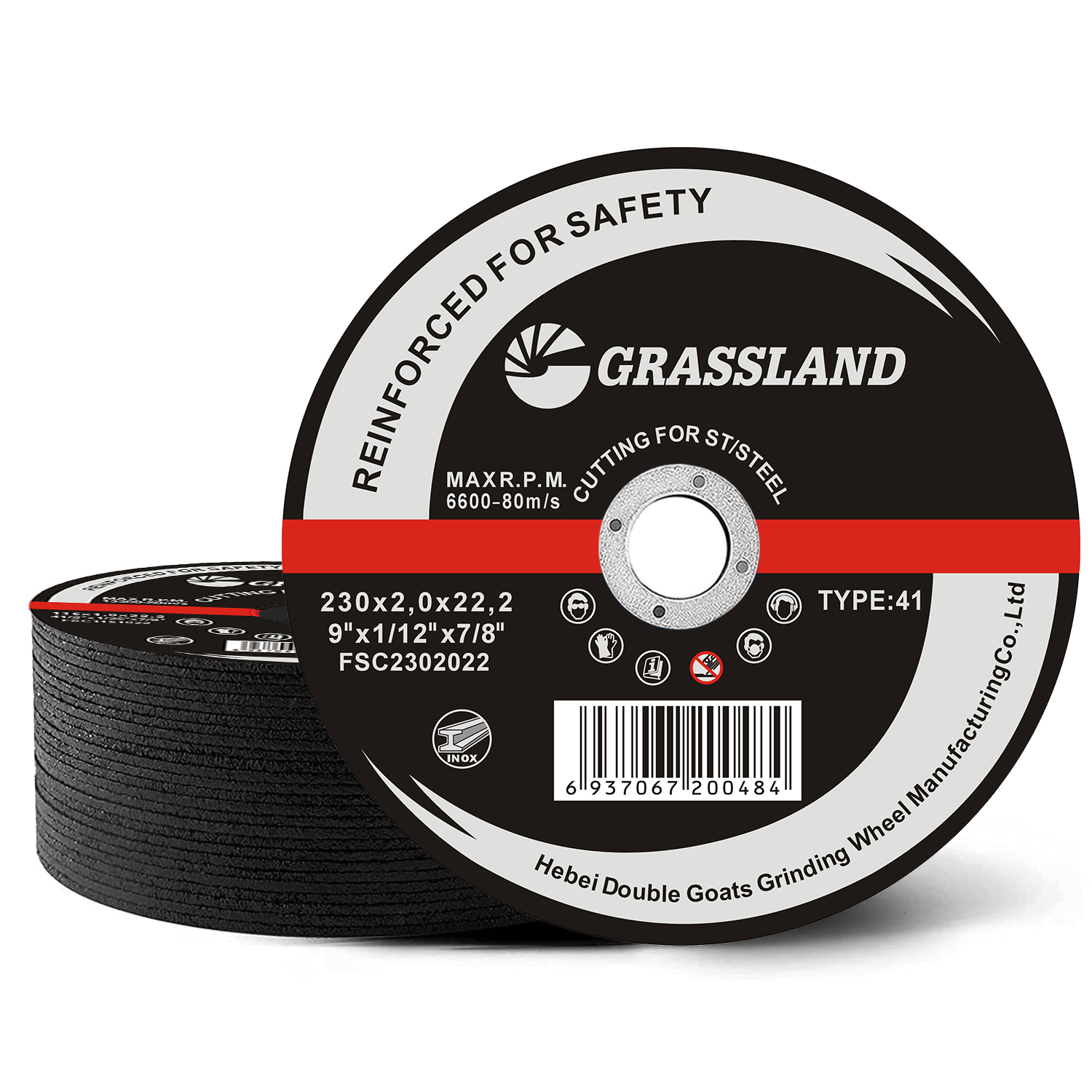
Industrial Metal Cutting Wheel Price and Performance Guide
Procuring industrial abrasives requires a precise balance between initial expenditure and operational longevity. When evaluating a metal cutting wheel price, professional buyers must look beyond the unit cost to consider the cost-per-cut ratio. High-performance discs, such as those utilizing premium aluminum oxide grains and reinforced fiberglass, reduce downtime and labor costs by providing faster, smoother cuts through ferrous metals and steel. This technical efficiency is critical for operations using hand-held angle grinders where safety and stability are paramount. By integrating advanced resin bonding and self-sharpening abrasive technology, manufacturers can deliver tools that maintain aggressive cutting power throughout their lifecycle, ensuring that the total cost of ownership remains low despite varying market prices.

The Engineering Logic Behind High-Performance Resin Bonded Cut Off Discs
The effectiveness of a metal cutting wheel is determined by its internal architecture, specifically the relationship between the abrasive grain and the bonding agent. Utilizing premium-grade aluminum oxide grains ensures an aggressive cut, as these grains are engineered to be self-sharpening. As the disc wears, new sharp edges are exposed, preventing the wheel from "glazing" or losing its efficiency during deep cuts into solid material.
To ensure safety at high rotational speeds, such as the 80 M/S max working speed found in professional series, multiple layers of long, stranded fiberglass are woven into the disc. This reinforcement layer provides the necessary lateral stability, which is essential when cutting risers or large profiles where significant lateral forces are present. The resin bond is carefully formulated to hold the grains securely while allowing them to break away at the optimal moment, maintaining a consistent cutting rate across various ferrous metal applications.

Operational Applications Across Ferrous Metal and Steel Fabrication
These cutting tools are designed for versatility in heavy-duty environments. They are particularly effective for grinding off and cutting through steel plates, iron rods, bars, pipes, and irregular sections. The ability to handle both flat (T41) and depressed (T42) center profiles allows them to be used with various hand-held angle grinders, providing operators with the flexibility to perform both surface finishing and deep material removal.
In practical scenarios, such as welding burr removal or the shaping of metal surfaces, the 46# and 60# grit sizes offer different balances of speed and finish. A coarser grit allows for rapid material removal in roughing stages, while finer grits ensure a smoother edge. Because these discs are Inox quality rated and certified to European EN12413 safety standards, they provide the reliability required for industrial-scale fabrication where zero-defect performance is a safety requirement.
Quality Assurance and Manufacturing Traceability in Abrasive Production
Consistency in cutting performance is achieved through rigorous manufacturing controls. Utilizing computer-controlled electric heating tunnel hardening furnaces—some of the longest in the world—ensures that the temperature is monitored at all key areas. This stability during the hardening process prevents internal stresses in the disc, which is critical for preventing catastrophic failure at high RPMs (up to 12,250 RPM for 125mm discs).
A comprehensive quality information traceability system tracks the product from raw material inspection in the laboratory to the final visual inspection before packaging. By using test workpieces imported from European markets, manufacturers ensure that the physical and performance tests align with international customer standards. This level of scrutiny ensures that every batch of reinforced fiberglass discs delivers the same cutting reliability and consistency, regardless of the volume of the order.
Technical Specification and Selection Matrix
| Disc Specification | Abrasive Material | Max Speed (m/s) | Typical Application |
|---|---|---|---|
| 125 x 3.2 x 22mm | Aluminum Oxide | 80 | Heavy Steel Cutting |
| 115 x 1.0 x 22.2mm | Aluminum Oxide | 80 | Thin Sheet Metal |
| 230 x 1.6 x 22.2mm | Aluminum Oxide | 80 | Large Profile Pipes |
| 180 x 2.0 x 22.2mm | Aluminum Oxide | 80 | Medium Angle Iron |
| 100 x 2.0 x 16mm | Aluminum Oxide | 80 | General Ironwork |
Strategic Procurement Factors for Industrial Cutting Consumables
When sourcing cutting wheels at scale, procurement managers should evaluate the synergy between the abrasive grade and the intended material. For example, the A46RBF grade is optimized for specific hardness levels in ferrous metals. Choosing a disc with the wrong hardness can lead to either premature wear or insufficient cutting speed, both of which increase the effective metal cutting wheel price through wasted time and material.
Furthermore, the importance of certification cannot be overstated. Compliance with ISO9001 and MPA EN12413 standards ensures that the products have undergone standardized stress tests. For OEM partners, the ability to customize disc dimensions and grit sizes allows for a tighter fit with specific machinery, reducing vibration and increasing the lifespan of the angle grinder's motor, thereby optimizing the overall operational budget.
Future Trends in Abrasive Technology and Safety Standards
The abrasive industry is moving toward higher safety margins and increased material efficiency. The adoption of more sophisticated resin bonds and enhanced fiberglass weaving patterns is allowing for thinner discs that can cut faster while maintaining high lateral stability. This trend reduces the amount of material removed during the cut (the kerf), leading to less waste in expensive metal stocks.
Additionally, the integration of fully-automatic production equipment and digital traceability is becoming the standard for world-renowned brands. This shift minimizes human error in the mixing and screening process, ensuring that every disc—from the first to the 400,000th in a daily production run—meets the exact technical specification required by the end-user, regardless of the geographical region of deployment.
Technical FAQ: Metal Cutting Disc Specifications
What does the "R" hardness grade mean in cutting wheels?
The "R" grade refers to the hardness of the bond. A medium-hard bond like 'R' is designed to balance the retention of abrasive grains with the ability to release them as they dull, ensuring a consistent cut rate for ferrous metals.
Why is fiberglass reinforcement necessary in cut-off discs?
Fiberglass layers provide structural integrity and lateral stability. This prevents the disc from shattering under the centrifugal force of high-speed rotation and protects the operator if the disc experiences slight side-pressure during use.
How do I choose between 46# and 60# grit size?
46# is a coarser grit suitable for rapid material removal and heavy cutting. 60# is finer, providing a smoother finish and a cleaner cut, making it ideal for precision work or final shaping.
Can these wheels be used for stainless steel?
Yes, provided they are Inox quality rated. These discs are formulated to prevent contamination of the workpiece and are designed to handle the toughness of stainless steel without clogging.
What is the significance of the EN12413 certification?
EN12413 is the European safety standard for bonded abrasives. Certification ensures the disc has passed rigorous speed and burst tests, guaranteeing a baseline of safety for the operator.
What causes a cutting disc to wear out too quickly?
Excessive lateral pressure, using a disc on a material it wasn't designed for, or applying too much force (which causes the bond to break prematurely) are the most common causes of rapid wear.
Technical References
- ISO Standards for Abrasive Products
- European Norms (EN) for Industrial Safety
- MPA Certification for Bonded Abrasives
- Occupational Safety and Health Guidelines for Cutting Tools
For organizations seeking to optimize their metal fabrication costs, selecting the correct abrasive specification is the most effective way to ensure safety and productivity. Contact our technical team to determine the ideal grit and bond for your specific material requirements.
Related Industrial Solutions